Water is a vital resource which is present in unchanging quantity, but only a small fraction of it is accessible and fit for human consumption. New technologies — including efficiency gains, recycling and automation — can be harnessed, and stainless steel is a vital part of the drive towards producing smarter water.
By James Chater
Background
The earth contains an estimated 1,386 million cubic kilometres of water. This level is constant; none of it escapes the earth’s atmosphere. There is a theory that this water comes from asteroids and comets that collided with earth; whatever the truth, for the last few billion years, the figure has remained constant.
However, it matters to human beings what form the water is found in. It can be in different phases (ice, liquid, vapour); most of it is unfit for consumption, because it is saline or contaminated; and some of it is difficult to access (for example, in glaciers or underground). All in all, only about 0.001% of water is readily available for human use. This partly explains why, in a world facing heavy population pressures, around 2 billion people do not have access to clean and safe drinking water, while 46% of the world’s population lacks adequate sanitation services.
Water availability is influenced by several factors: political, ecological, etc., and many of the solutions are not a question of technology per se.
For instance, carbon emissions cause global warming that gives rise to erratic weather patterns; planting trees can help fix the water in the ground; mobile laboratories or public transport can make it easier for rural populations to gain access to water.
Technology
However, technology can make a great deal of difference in a number of areas, including efficiency gains, recycling and automation.
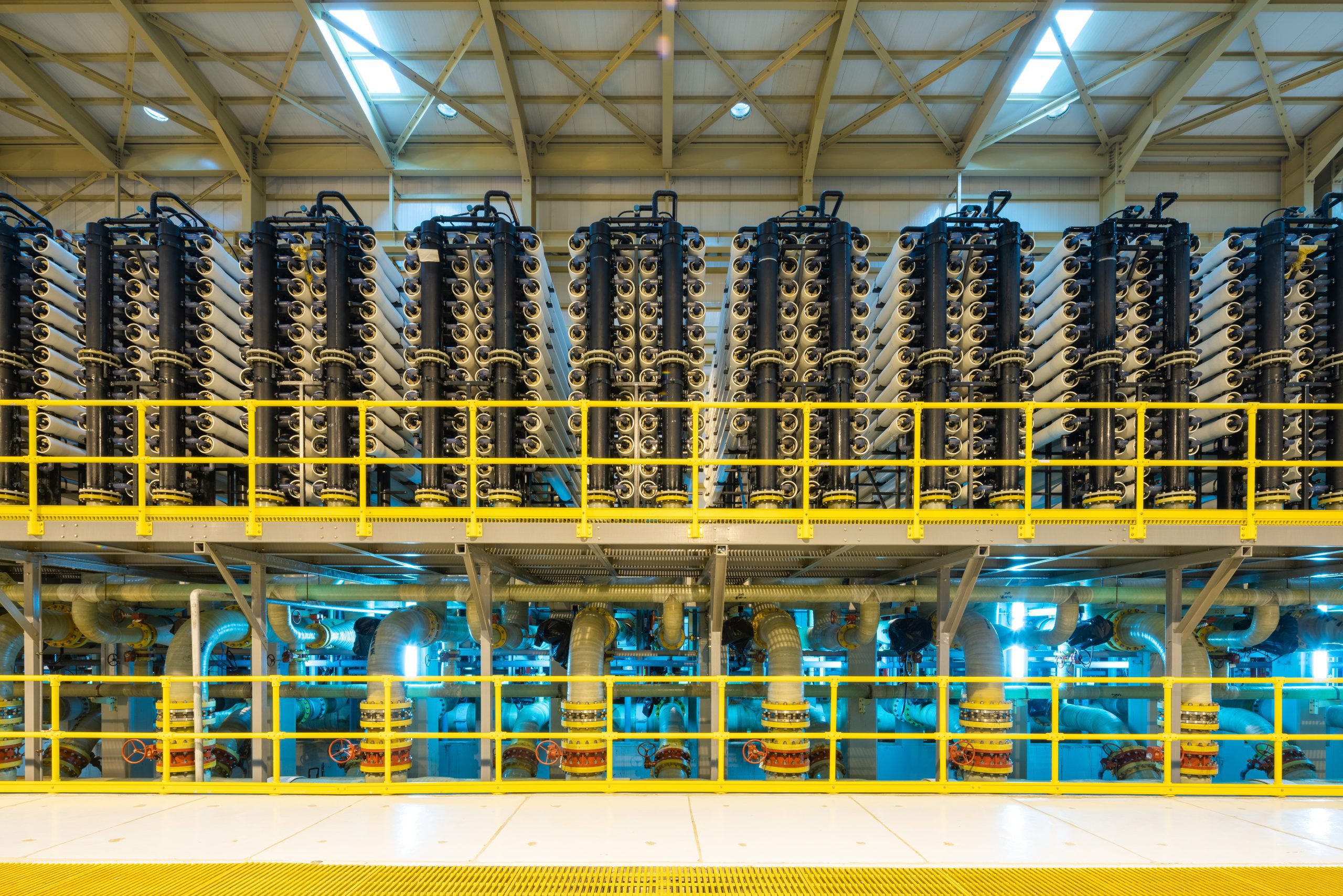
Efficiency gains: Whether in terms of energy consumption, water consumption or carbon footprint, the latest wastewater and desalination plants are much more efficient than the older ones. Veolia’s seawater desalination plant at Hassyan, UAE, due to go online in 2026, will be powered by solar energy and consume a low 2.9 kilowatt-hours per cubic metre, confirming the progress of reverse osmosis (RO) plants, which have reduced energy consumption by 35% over the last 10 years. The modernization of Veolia’s Greater Lyon wastewater treatment plant at Saint Fons will see a reduction in electricity consumption by 10%, gas consumption by 72% and chemical additives by 50%. Waste heat recovery from nearby incinerators will replace fossil fuels. These are examples of Veolia’s 2024-7 “Strategic Program”, which aims for efficiency gains in its water management and energy consumption.
Desalination is rapidly emerging as a means to ensure adequate supplies of drinking water, especially in dry regions such as the Persian Gulf. A major problem is what to do with the salt once it has been extracted.
Discharge back into the sea is scarcely an option given the threat to marine life, while disposal on land harms the soil and vegetation. Solutions have been proposed by MIT, which is studying a process of converting waste materials into useful chemicals, including ones that increase the efficiency of the desalination process itself.
The process produces sodium hydroxide (caustic soda) that pretreats the seawater before desalination, making it less acid and so less corrosive.
Another chemical that can be produced is hydrochloric acid, which can be used to clean parts of the desalination plant and is also a source of hydrogen. The increasing synergy between the desalination and chemical industries can be seen in the concentration in brine of not only salt but chemicals such as magnesium, potassium and bromine that can be nano-filtered out and recycled in chemical plants.
Other important trends improving the efficiency of water treatment include portable desalination and air-to-water plants. Although desalination plants are getting bigger, remote locations, yachts and off-grid locations require micro-solutions (similar to the current trend towards smaller nuclear plants).
MIT is working on a system to remove particles and salts through electricity, eliminating the need for filters and high-pressure pumps. Furthermore, it is now possible to produce water from moist air. France’s Eole Water is pioneering this by using a modified wind turbine design. Air is sucked into an electric cooling processor, where the moisture is extracted and condensed into water. The device works even in drier climates: Eole’s prototype in the Abu Dhabi desert produces 62 litres per hour.
Recycling: Treated wastewater is widely used in irrigation and industry. This requires removal of sediment, bacteria and micropollutants. What is relatively new is recycling of water for drinking.
This is still little known in the cooler regions of the north, but in the water-stressed tropical and southern regions it is catching on: examples include Namibia, Australia, California, Texas and Singapore. But France, Spain, Portugal and Greece are prone to drought as well, and it is only a matter of time before recycled drinking water, unappetizing though it may sound, will be introduced there.
In an effort to overcome negative emotions over this issue, in 2018 Sweden’s IVL Swedish Environmental Institute, Nya Carnegie Brewery, and Carlsberg Sweden launched PU:REST, a beer made with recycled water. A year later in Germany, Reuse Beer, also made from recycled water, was launched but is no longer being produced.
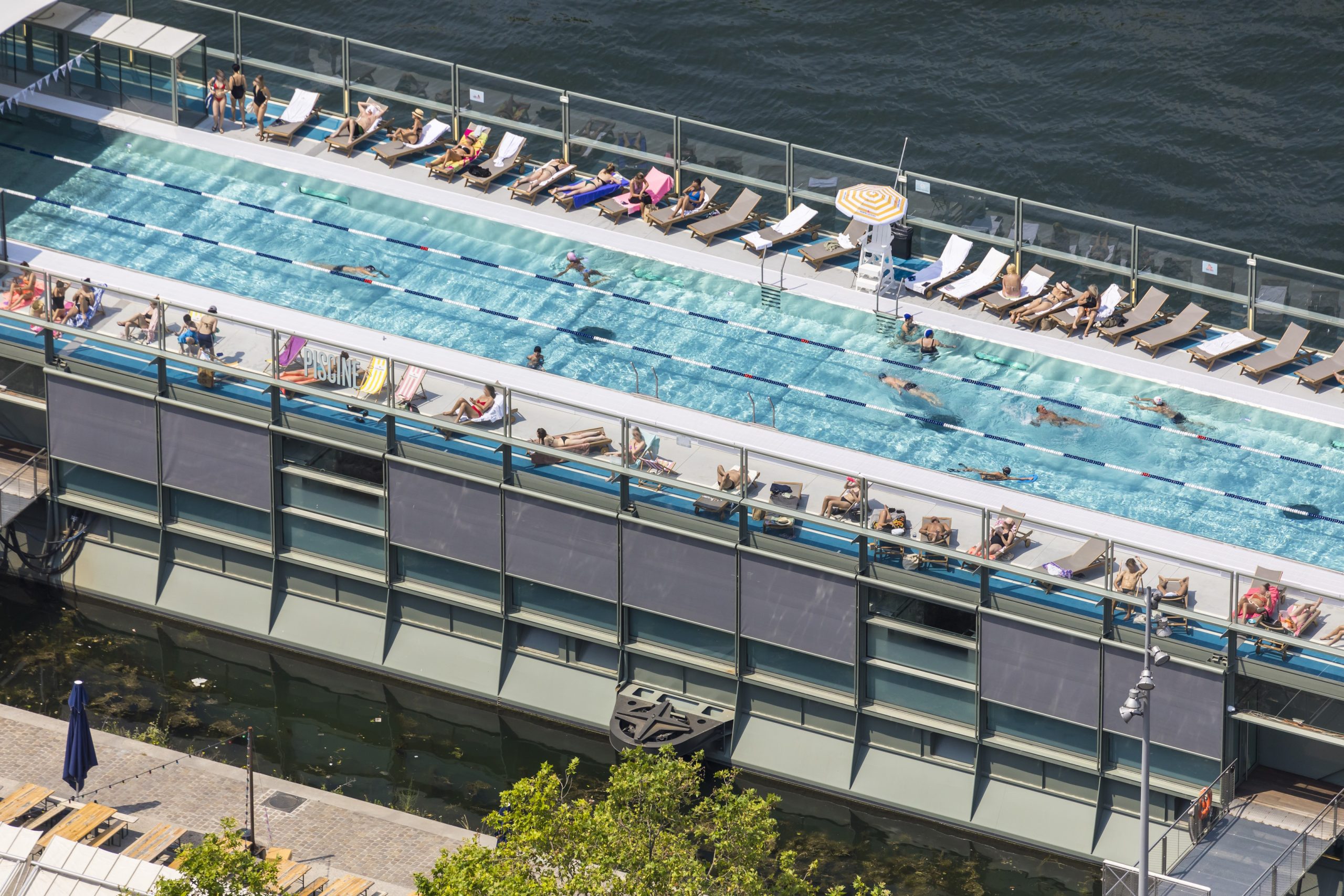
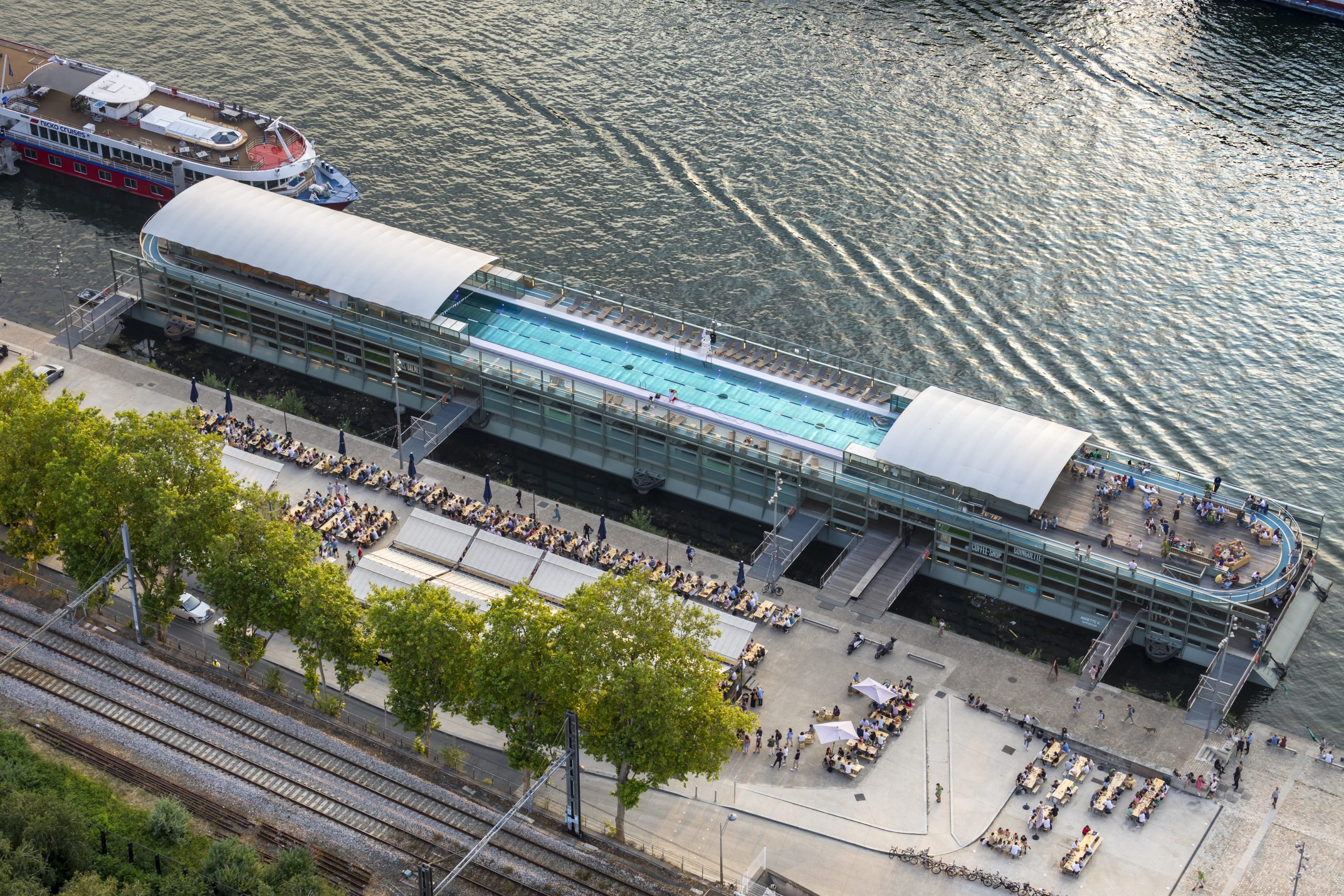
Floating in the river Seine, the “Annette K” swimming pool was built for the Paris Olympics, using stainless steel sheets supplied by Schmidt Edelstahl. The architect is Seine Design. Photo: Sergio Grazia.
Automation: Information technology (including AI) is an integral part of the drive towards efficiency. When Shenzhen (China) modernized its water supply a few years ago, it installed a smart control system uniting the primary (mains) and secondary systems. The latter were equipped with meters and cameras to monitor flow rates and performance of valves and pumps.
Veolia applies smart monitoring solutions to protect water networks. These speed up the information-gathering process, allowing instantaneous decision- making. The KAPTA™ 3000-AC- 4sensors collect physico-chemical data (conductivity, pressure, temperature and chlorine content) to warn of problems such as leaks, corrosion, clogging or contaminants.
Materials
“304 or higher” is standard in the specification of stainless steel in water projects. In practice this means that austenitics 304(L) and 316(L) are the most commonly applied grades in pipes, storage tanks, valves and pumps. This was not always the case: in the past, concrete, bamboo and wood were among the materials used.
In China, secondary water systems were traditionally made with galvanized steel, ductile iron or plastic, which are all prone to leak. The ambitious Shenzhen modernization project used 304 and 316, and although the older materials persist in existing infrastructure, 316L is now standard in nearly all modern upgrades and newbuilds. A significant growing market is district heating pipes, where stainless is applied in both in the primary circuit connecting the power station to the substations and the secondary circuits within the buildings.
The duplex family of stainless steels plays an indispensable role in more demanding applications. The modes of use can be divided into two types of service: handling corrosive or erosive substances such as wastewater of saltwater; and providing lightness and strength in floodgates.
Desalination, a chemical process, requires various duplex and super-duplex grades.
The most demanding environments, combining heat, high pressure and corrosion, are found in the energy-intensive MED and MSF plants, especially at the brine water intake stage. Depending on specific factors, super-duplex type 2507, lean duplex LDX 2101, super-austenitic 254 SMO and austenitic 316L all come into play.
Duplex grades are also used in wastewater treatment processes, where high strength and resistance to erosion and corrosion are required. A recent example of its use was in Barhale’s work for Thames Water on sewerage in East London, where duplex was applied on wastewater pipes.
Another application requiring duplex is floodwater management. Municipalities are turning more to these grades for floodgates, which require resistance to saline corrosion and a favourable strength-to-weight ratio.
Projects include:
Tammerkoski rapids, Tampere, Finland (completed in 2012). The wooden floodgates had to be replaced, and at first carbon steel was envisaged. But in the end Outokumpu’s Forta LDX 2101 lean duplex grade was applied in the main structural parts of the gates.
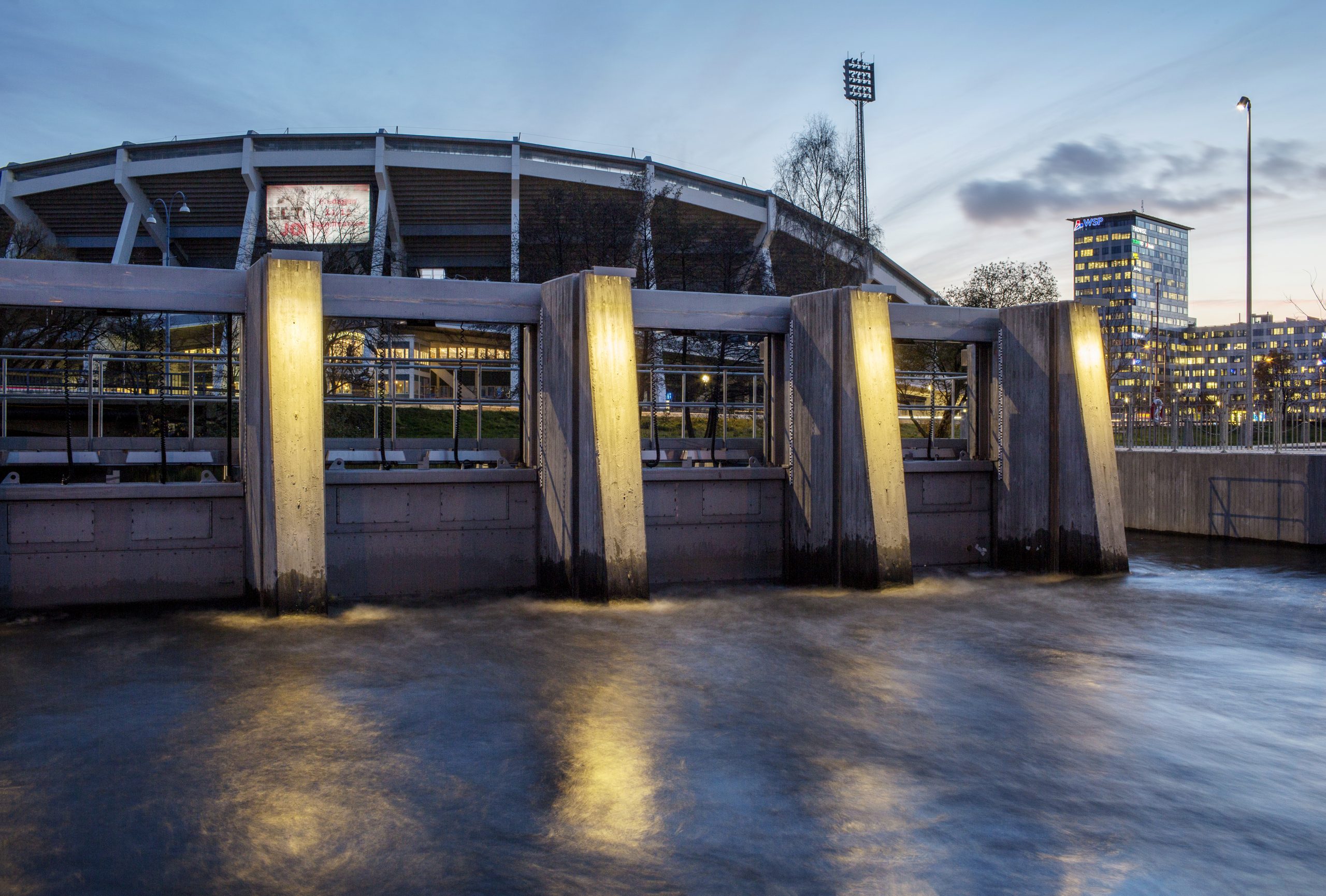
Gårda Dämme, Gothenburg, Sweden. In 2013, Outokumpu supplied its Forta LDX 2404 lean duplex grade to replace wooden gates. The coastal city is built on islands intersected by canals, and flooding is a great risk. The new gates help to protect its inhabitants at a time of rising sea levels.
Mont St Michel, France. The sea was encroaching on this historic landmark, making access more difficult. That is, until a flood barrier was erected. Industeel supplied 36 tonnes of 2205 duplex plate as cladding for the gates’ coated carbon-steel frame.
Victoriaslussen project, Stockholm, Sweden. This lock is located at Lake Mälaren right in the city centre, an area prone to floods. Apart from flood protection, the gates prevent brackish water from contaminating the drinking water. As part of the extensive Slussen project, new duplex sluice gates in duplex 2205 were built. They will be larger and stronger, capable of releasing more water than their wooden predecessors. The gates were inaugurated in 2022.
Kamihirai Flood Gate, Tokyo, Japan. This is a crucial structure in Tokyo’s flood defence system. Originally built in carbon steel in the 1970s, the carbon- steel slide gates were recently replaced with ones in duplex stainless steel. It was decided that using a conventional austenitic grade would significantly increase the weight and pose a risk to the structure. Therefore, a lean grade, NSSC’s SUS323L, was used. Another factor that weighed in the selection of a strong material was the need for protection against earthquakes.